How to Earn Citations from ChatGPT, Perplexity, and Google AI
AI models cite sources they trust. Here is a practical playbook for becoming one of those sources for your category.
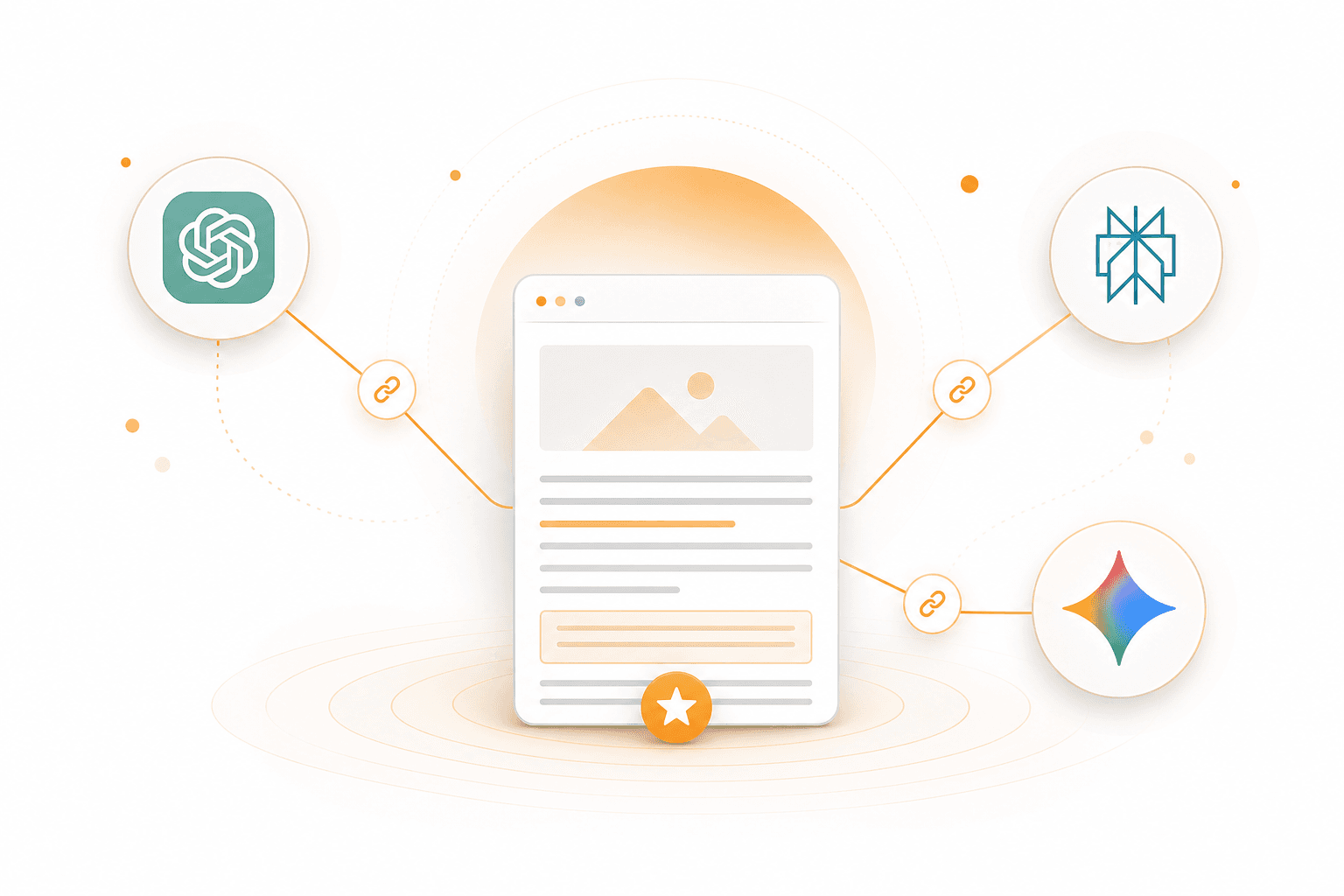
Understand what AI models cite
Large language models and retrieval-augmented systems pull from a mix of training data and live web indexes. They favor pages with clear, factual statements; structured data; and corroboration from multiple trusted domains. Listicles, comparison pages, and definitive guides on narrow topics outperform vague marketing copy.
Start by searching your category in Perplexity and Google AI Overview. Note which domains appear repeatedly. Those are your citation benchmarks — study their format, depth, and entity coverage.
Publish answer-first content
Structure pages so the first paragraph directly answers the question a user would ask an AI. Use H2 headings as questions ('What is the best X for Y?') and follow with concise, quotable paragraphs. Add FAQ schema and comparison tables where relevant.
Include specific data points — pricing ranges, feature lists, use cases — that models can extract without ambiguity. Vague superlatives ('industry-leading') are ignored; concrete claims ('serves 2,000+ e-commerce brands in Europe') are remembered.
Build off-site citation footprint
On-site optimization alone is not enough. AI models weight external mentions heavily: Wikipedia stubs, G2 and Capterra reviews, Reddit threads, industry directories, and guest posts on authoritative blogs. A coordinated effort to seed accurate brand facts across these surfaces compounds over time.
Monitor which prompts trigger competitor citations and create dedicated landing pages or blog posts targeting those exact queries. Regenerate and expand content where your visibility score is low. Consistency beats one-off campaigns.